Showing posts with label module 4. Show all posts

Sunday, January 13, 2013

Module 4 - Question Samples


These can be some of the areas to be questioned. The questions are not designed as per the requirements as it is intended to demonstrate the possible ares to be asked.

1. Why diode is place in series to LED?.
        To protect the LED against reverse voltage.

2. In NPN transistor, what is P?.

3. What type of pulse trigger for SCR?

4. When SCR start to conduct , when does it stop?

5. Transistor is saturated, what happen to the resistance?

6. A capacitor is used to separate multistage amplifier, what is the effect of the capacitor.

7. To be used as amplifier, the transistor must be biased at which region?

8. Ops Am, + connected to earth, what type of amplifier?

9. How do you control the gain of an operational amplifier?

10. The process of adding impurities to semiconductor is called….

11. Where is/are the traces in a Multilayed PCB?
Traces are the copper connectors either at the top/bottom or is some PCB in the core.

12. What is/are the PCB substrate is made from?
substrate is the base of PCB, it is made from insulation material such as fibre glass or resined paper.

13. After the components are soldered, the PCB is environmentally sealed by using ……….  Coating.

The coating is called conformal coating, it provides the protection but easier to remove the components.

14. How is the DIP ic being mounted on PCB?.

15. When testing diode, you have low resistance in both ways, what does this show?.

16. What type of component the 3N123? .

Saturday, September 29, 2012

Operational Amplifier - Video 1

This an introductory video. I would start with explaining what it is.
PLEASE READ THE TEXT AND THEN WATCH THE VIDEO.

A. Operational Amplifier is a analogue circuit, with a set of input and an output. It is a very flexible amplifier and by changing the external wiring, it can be used for different functions.
It uses include
- mathematical functions of adding and subtraction  multification.
- Amplifiers - DC amplifier and AC
- comparator
- Summation

B. Characteristics
- High gain
- Input impedance - very high and does not load the source
- Output impedance - zero
- Bandwidth - indefinite
- Supply voltage - unaffected by the load

C. Example
- Gain 200,000 voltage gain
- Input impedance - 2Mohm
- output impedance - 75 ohms
- Bandwidth - to 1 MHz
- Supply Voltage .... + and -  5 to 15 volts

D. Notation

The Operation amplifier can be shown as a 5 pin IC,


Module 4 Thyristors and SCR

Thyristors are a family of semi conductor devices sharing a common characteristic.. they will latch to the last position. if its conducting or On, it remain ON until the current drops below the threshold level.

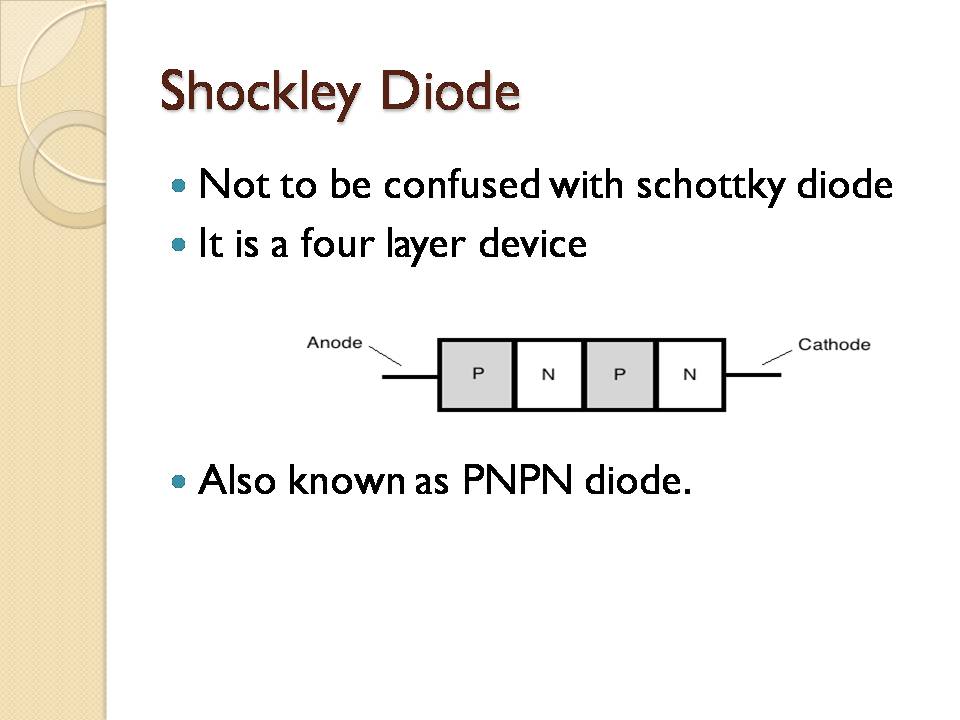
The syllabus mentions about the SCR, the oldest generation of thyristors. We will cover other types such as DIAC and Trics. In ths short session we will look at the characteristic, the construction and the operation. We will startt with the oldest, which is the Shockley diode. As this diode allows current to flow one way only, two shockley diodes are combined to form a diac, which allow current to flow both ways.
Then we look at the characteristic of the DIAC  


Opto-thyristors has the same characteristics like the earlier mentioned items. but with one different, it operated by light like the photodiodes. The students need to remember the basic characteristic of semiconductor, the resistance decreases as the temperature increases. The resistance reduce as it receive more light. When resistance reduces, current increase   


RESOURCES


Tuesday, September 11, 2012

How Transistor Works

The description below is intended to assist those sitting for module 4 EASA part 66 module 4.

Sunday, September 9, 2012

How a Diode Works

Module 4 is about the basic electronics. Under this topic we are learning about the semi-conductors and its components and integrated circuits.
Prior Knowledge
Before you can discuss how a diode work, you have to have a basic understanding of semiconductor, the atomic structure and the way the current flows.

Introduction. 
After the doping process, basically there are 2 type of semiconductor, the P-type and the N-type. P type, has shortage of electrons, the doping process has introduced material with only 3 valence electron. Thus its major current carrier is "holes".

The N-type of material has excess electrons. This is because the doping material had 5 valence electrons.

How Diode Works
A diode will allow current to flow with lesser resistance if it is connected following the arrow as in the schematic symbol. Although we normally say that the reversed flow is blocked, in reality, there is always the breakdown point. The resistance will break above a certain voltage.

Diode showing the PN materials